
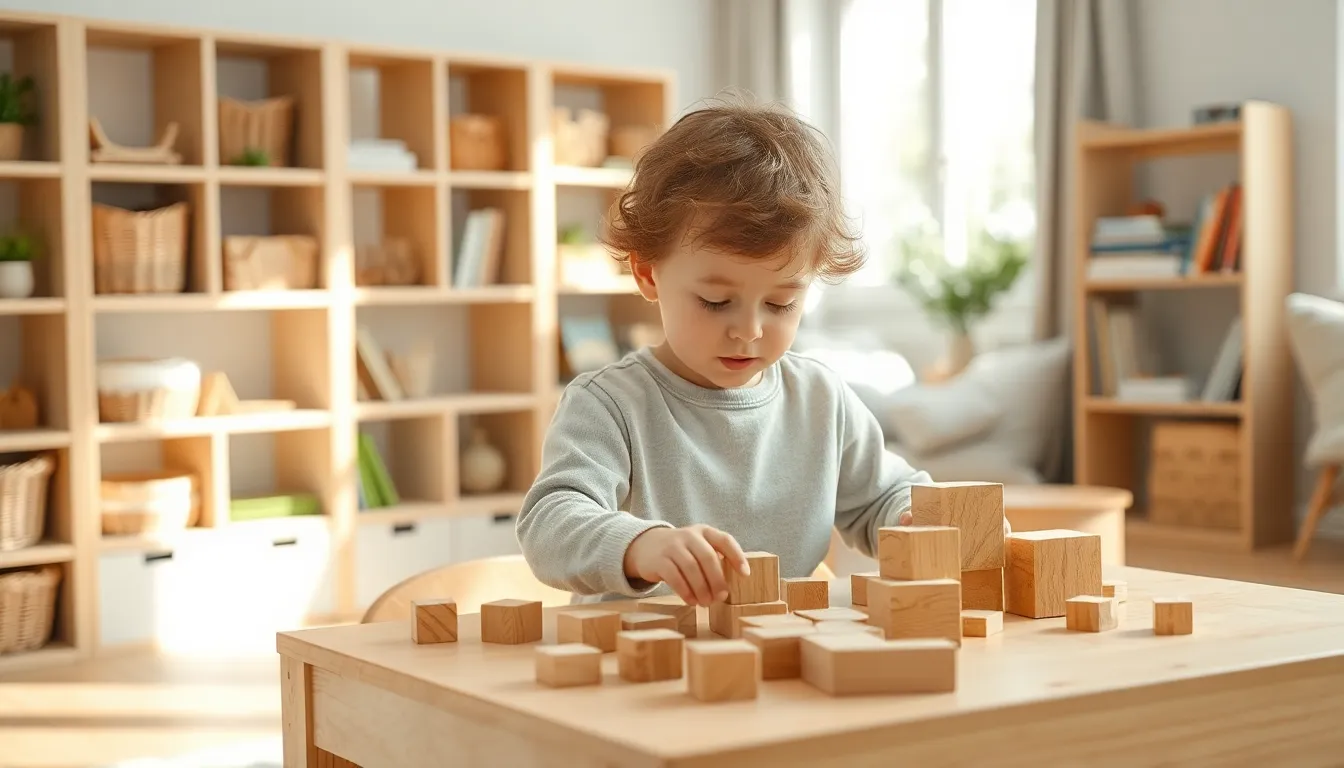
Montessori tips can transform how children learn and grow at home. Parents don’t need specialized training or expensive materials to apply these methods. The Montessori approach centers on respect for a child’s natural development, curiosity, and independence. By making small changes to the home environment and daily routines, caregivers can nurture confident, self-directed learners. This guide shares practical montessori tips that any family can start using today.
Table of Contents
ToggleKey Takeaways
- Create a prepared environment by placing items at your child’s level and keeping spaces simple and uncluttered.
- Follow your child’s natural interests to boost engagement and make learning more effective.
- Encourage independence by involving children in self-care routines and age-appropriate household chores.
- Use hands-on, open-ended materials like wooden blocks and sensory bins instead of electronic toys.
- Observe your child without interruption to discover their readiness for new skills and deeper learning opportunities.
- You don’t need expensive materials to apply Montessori tips—everyday household items work wonderfully.
Create a Prepared Environment
A prepared environment is one of the most important montessori tips to carry out at home. This means organizing spaces so children can access what they need independently.
Start by placing items at your child’s level. Store toys, books, and art supplies on low shelves they can reach without help. Use child-sized furniture where possible. A small table and chair make activities more comfortable and accessible.
Keep spaces simple and uncluttered. Too many choices can overwhelm young minds. Rotate toys every few weeks instead of displaying everything at once. This approach keeps materials fresh and interesting while reducing visual chaos.
Organize belongings in clear containers or baskets. Label them with pictures for pre-readers. When everything has a designated spot, children learn to put things away after use. This builds responsibility and keeps the space functional.
Safety matters too. Childproof areas where your child will explore freely. Remove breakable items from low surfaces. The goal is creating a space where children can move, touch, and discover without constant redirection.
A prepared environment sends a clear message: this space belongs to you, and you can care for it yourself.
Follow Your Child’s Interests
One of the best montessori tips involves observing what captures your child’s attention. Children learn faster and retain more when they’re genuinely interested in a subject.
Watch for patterns. Does your child gravitate toward animals, vehicles, building, or art? These interests provide natural entry points for deeper learning. A child fascinated by dinosaurs might enjoy sorting toy dinosaurs by size, counting them, or learning about the time periods when they lived.
Let curiosity guide activities. If your child shows interest in cooking, involve them in meal preparation. Measuring ingredients introduces math concepts. Reading recipes builds literacy skills. Following steps teaches sequencing.
Avoid forcing topics that don’t spark engagement. Traditional education often pushes subjects on a fixed timeline. Montessori tips suggest a different path, one where internal motivation drives learning. A child who chooses to explore a topic will dig deeper than one who’s told to study it.
This doesn’t mean abandoning structure entirely. Parents can offer choices within boundaries. Present two or three activity options and let your child pick. This balance respects their autonomy while ensuring variety.
Trust the process. Interests may seem random or narrow at first, but they often connect to broader skills over time.
Encourage Independence in Daily Tasks
Fostering independence ranks among the most valuable montessori tips for families. Children thrive when trusted with real responsibilities.
Start with self-care routines. Provide a step stool at the bathroom sink so your child can wash hands and brush teeth independently. Place clothes in low drawers they can access. Even toddlers can learn to dress themselves with practice and patience.
Involve children in household chores. Young children can wipe tables, water plants, fold washcloths, and sort laundry. These tasks build motor skills, concentration, and a sense of contribution to the family.
Resist the urge to intervene too quickly. When a child struggles with a zipper or spills while pouring, wait before jumping in. Struggle is part of learning. Offer help only when frustration becomes overwhelming.
Break tasks into manageable steps. Instead of saying “clean your room,” try “put your books on the shelf.” Specific instructions set children up for success.
Celebrate effort over results. A bed made with lumpy covers still represents accomplishment. Praise the attempt: “You made your bed all by yourself.” This builds confidence and motivation to keep trying.
Independence grows gradually. What seems slow now creates capable, confident children over time.
Use Hands-On Learning Materials
Hands-on materials form the foundation of effective montessori tips. Children learn best through touch, movement, and direct experience.
Choose open-ended materials over electronic toys. Wooden blocks, puzzles, art supplies, and sensory bins engage multiple senses. They invite exploration without predetermined outcomes. A set of blocks can become a tower, a road, or a pretend telephone, the possibilities shift with each play session.
Incorporate real objects when possible. Let children use real glass cups, ceramic dishes, and metal utensils (with supervision). Handling breakable items teaches care and respect for materials. It also builds fine motor control.
Create opportunities for practical life activities. Pouring water between containers, using tongs to transfer objects, and threading beads all develop coordination. These simple activities prepare hands for writing later.
Limit screen time. Digital devices have their place, but they can’t replace physical manipulation. The brain processes information differently when hands are involved. Montessori tips emphasize concrete experiences before abstract concepts.
Match materials to your child’s current abilities. Too easy causes boredom: too hard leads to frustration. Watch for signs that your child is ready for the next challenge.
You don’t need expensive Montessori materials. Household items work wonderfully. Muffin tins for sorting, measuring cups for pouring practice, and nature collections for classification all support hands-on learning.
Embrace the Power of Observation
Observation is one of the most overlooked montessori tips, yet it transforms parenting. Watching your child without interruption reveals valuable information.
Set aside time to simply watch. Notice how your child approaches challenges. Do they persist or give up quickly? Do they seek help immediately or try to solve problems alone? These patterns help you understand their temperament and needs.
Observation shows readiness for new skills. A child who repeatedly tries to pour their own drink is ready for a child-sized pitcher. One who watches older siblings write might be ready for pre-writing activities. Following these cues matches learning to development.
Avoid interrupting concentration. When a child focuses deeply on an activity, protect that focus. Don’t offer praise, suggestions, or redirection unless necessary. Deep concentration is rare and valuable, it’s where real learning happens.
Keep brief notes if helpful. Jot down what activities held attention longest, what challenges arose, and what new interests emerged. Patterns become clearer over weeks and months.
Observation also builds connection. Children feel seen when parents pay attention to their world. This strengthens trust and communication.
The best montessori tips come from your own child. Watch them, and they’ll show you what they need.