
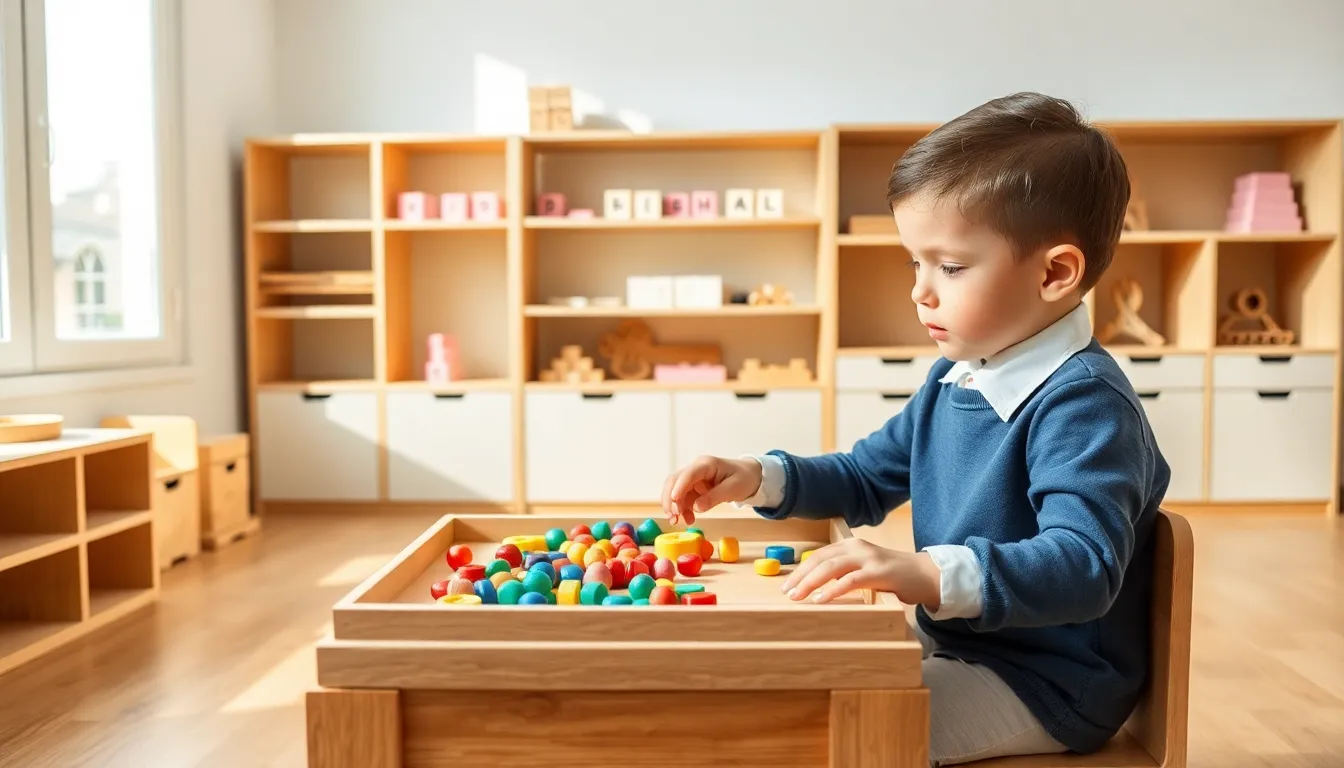
Montessori examples show how children learn best through hands-on, self-directed activities. This educational approach lets kids explore at their own pace while building real skills. Parents and educators often search for practical Montessori examples they can use at home or in classrooms. The good news? Many activities require simple materials you already have. This guide covers age-appropriate Montessori examples for toddlers, preschoolers, and elementary-age children. Each activity supports independence, concentration, and a genuine love of learning.
Table of Contents
ToggleKey Takeaways
- Montessori examples focus on hands-on, self-directed activities that let children learn at their own pace while building real-world skills.
- Authentic Montessori activities share five key principles: child-led exploration, real-world purpose, hands-on materials, built-in self-correction, and isolation of skill.
- Toddler Montessori examples include transferring activities, opening containers, simple pouring, and practical life tasks that build independence and fine motor skills.
- Preschoolers benefit from sensorial activities, sandpaper letters, moveable alphabets, and food preparation that connect abstract concepts to physical experience.
- Elementary-age Montessori examples expand to research projects, timeline work, bead frame math, and collaborative group work that develop critical thinking and leadership.
- Many effective Montessori examples require only simple household materials, making this approach accessible for both home and classroom settings.
What Makes an Activity Montessori-Based
Not every hands-on activity qualifies as a Montessori example. Certain key principles separate Montessori activities from regular crafts or games.
Child-Led Exploration
The child chooses the activity and works at their own speed. Adults observe and guide rather than direct every step. This builds decision-making skills early.
Real-World Purpose
Montessori examples often involve practical life skills. Pouring water, folding clothes, and preparing snacks teach useful abilities. Children feel proud when they contribute to daily tasks.
Hands-On Materials
Montessori activities use physical objects children can touch and manipulate. Abstract concepts become concrete through sensory experience. A child learns math by counting beads, not just memorizing numbers.
Self-Correction Built In
The best Montessori examples include a control of error. Children can see their own mistakes without adult intervention. A puzzle piece that doesn’t fit shows the error immediately. This teaches problem-solving and persistence.
Isolation of Skill
Each Montessori activity focuses on one concept or skill. This clarity helps children master abilities step by step. They build confidence before moving to harder challenges.
Understanding these principles helps parents recognize authentic Montessori examples. They can also adapt everyday moments into learning opportunities.
Montessori Examples for Toddlers
Toddlers between ages 1 and 3 crave independence. They want to do things themselves. These Montessori examples channel that energy into productive activities.
Transferring Activities
Set up two bowls and give the child a spoon. They practice scooping beans, rice, or pom poms from one bowl to another. This builds hand coordination and concentration. Start with larger items and progress to smaller ones as skills improve.
Opening and Closing Containers
Collect jars, boxes, and containers with different lids. Toddlers love figuring out how each one opens. This Montessori example strengthens fine motor skills and logical thinking.
Simple Pouring
Use small pitchers with dry materials like rice or lentils. The child pours from one pitcher to another. Once they master dry pouring, introduce water. Place the activity on a tray to contain spills. This prepares them for serving themselves at meals.
Matching Objects
Create pairs of identical items, two red blocks, two small balls, two wooden spoons. The toddler matches them together. This develops visual discrimination and early sorting skills.
Dressing Frames
Frames with large buttons, zippers, or velcro let toddlers practice dressing skills in isolation. They can focus on one fastener type without the frustration of getting dressed.
Practical Life Tasks
Toddlers can wipe tables, water plants, and put dirty clothes in hampers. These Montessori examples give real responsibility. Children feel valued when they help with household tasks.
Keep toddler activities short and simple. Rotate materials weekly to maintain interest.
Montessori Examples for Preschoolers
Children ages 3 to 6 can handle more complex Montessori examples. Their attention spans grow, and they seek greater challenges.
Sensorial Activities
Pink Tower and Brown Stair materials teach size discrimination. Children stack blocks from largest to smallest. Color tablets help them identify and grade shades. Sound cylinders develop auditory perception. These sensorial Montessori examples prepare the brain for abstract thinking.
Letter Sandpaper Cards
Children trace textured letters with their fingers while saying the sound. This multi-sensory approach connects the physical shape to the phonetic sound. It builds strong pre-reading foundations.
Moveable Alphabet
Wooden or plastic letters let preschoolers spell words before they can write. They sound out simple words and arrange letters. This separates reading skills from the physical challenge of handwriting.
Number Rods and Spindle Boxes
Number rods introduce quantities 1 through 10. Children physically feel that 10 is longer than 1. Spindle boxes teach the concept of zero, an empty compartment holds nothing. These Montessori examples make math concrete.
Food Preparation
Preschoolers can slice bananas with child-safe knives, spread butter on bread, and peel oranges. They follow multi-step sequences and create something they can eat. Cooking activities build practical skills and healthy eating habits.
Care of Environment
Sweeping, folding napkins, arranging flowers, and washing dishes give preschoolers ownership of their space. They learn respect for materials and surroundings.
Art and Craft Work
Set up an art station with scissors, glue, paper, and crayons. The child chooses what to create. Process matters more than product in Montessori examples. Adults avoid directing the outcome.
Montessori Examples for Elementary-Age Children
Elementary students ages 6 to 12 think more abstractly. Montessori examples at this stage connect to the bigger picture.
Research Projects
Children choose topics that interest them. They gather information from books and approved websites. They create presentations or reports to share findings. This builds research skills and public speaking confidence.
Timeline Work
Students create timelines of historical events, scientific discoveries, or personal milestones. They physically place events in sequence. This visual approach makes history tangible and memorable.
Bead Frame Math
The Montessori bead frame teaches place value through hands-on manipulation. Children perform addition, subtraction, multiplication, and division with physical beads. Abstract math becomes visible and logical.
Grammar Boxes
Colored symbols represent different parts of speech. Students analyze sentences by placing symbols above each word. This Montessori example turns grammar into a puzzle rather than rote memorization.
Science Experiments
Hypothesis, testing, and observation form the basis of scientific thinking. Children grow plants, study insects, or test simple physics principles. They record observations in journals.
Community Service
Elementary-age children can participate in service projects. They plan, organize, and execute ways to help others. This develops social responsibility and leadership skills.
Money Management
Give children a small budget for a project or purchase. They must plan, compare prices, and make decisions. Real money teaches math and financial responsibility better than any worksheet.
Collaborative Work
Older elementary students work together on group projects. They assign roles, manage timelines, and solve conflicts. These Montessori examples prepare children for real-world teamwork.