
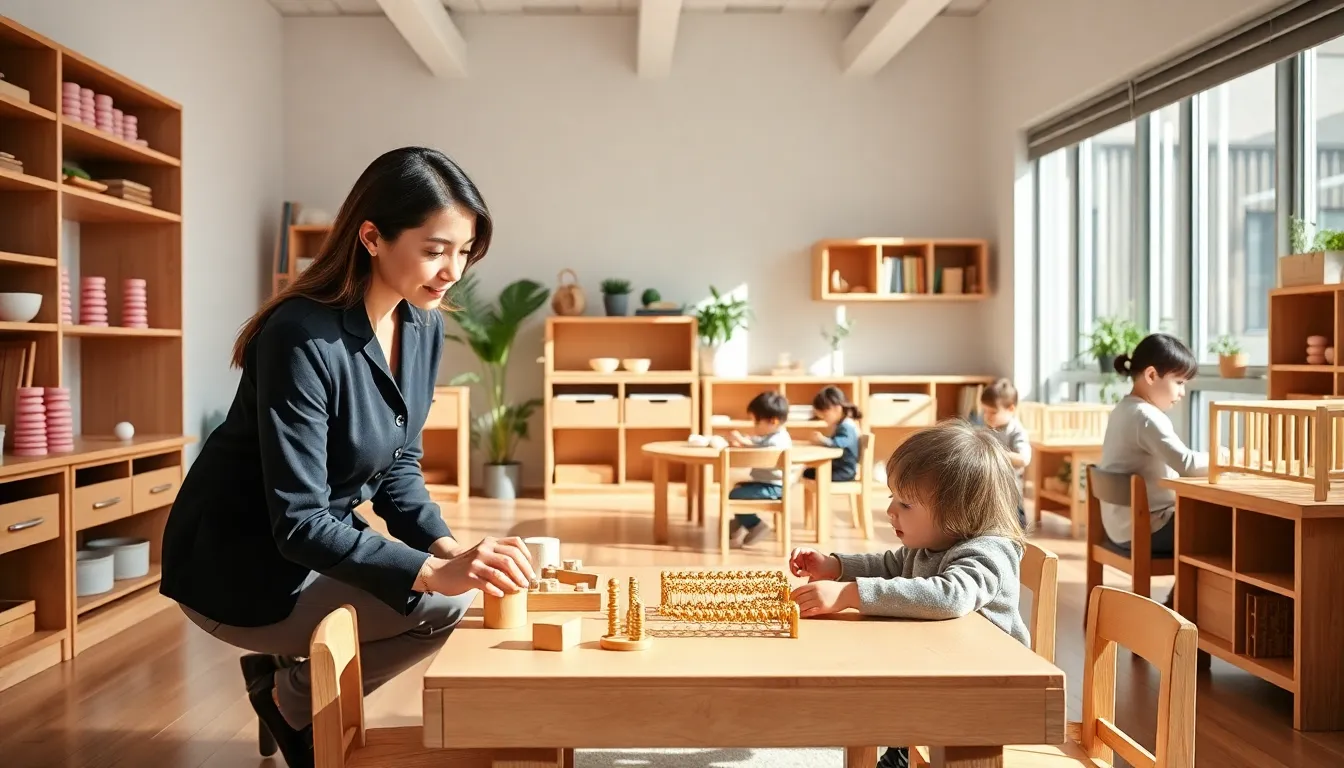
Finding the best Montessori school for a child requires careful research and clear criteria. Montessori education follows a unique philosophy that emphasizes independence, hands-on learning, and mixed-age classrooms. Parents often feel overwhelmed by the options available, especially since not all schools labeled “Montessori” follow the same standards.
This guide breaks down what separates excellent Montessori programs from mediocre ones. It covers the essential features to look for, practical evaluation methods, and specific questions to ask during school visits. By the end, parents will have a clear framework for making this important decision.
Table of Contents
ToggleKey Takeaways
- The best Montessori schools feature AMI or AMS-certified teachers, authentic Montessori materials, and uninterrupted work periods of 2.5–3 hours.
- Look for accreditation from recognized Montessori organizations since the term “Montessori” isn’t trademarked and anyone can use it.
- Mixed-age classrooms spanning three-year age ranges (3-6, 6-9, 9-12) are a hallmark of authentic Montessori education.
- Schedule classroom observations to see children working independently in a calm, focused environment guided by teachers rather than lectured to.
- Quality Montessori programs use observation-based assessments instead of traditional grades, providing detailed progress reports to parents.
- Ask specific questions about teacher credentials, work periods, discipline approaches, and parent communication during school visits.
What Makes a Montessori School Stand Out
The best Montessori schools share certain qualities that set them apart from traditional education, and from subpar Montessori programs.
First, authentic Montessori schools follow the educational philosophy developed by Dr. Maria Montessori over a century ago. This means child-led learning, where students choose their activities within a structured environment. Teachers act as guides rather than lecturers.
A standout Montessori school maintains properly trained staff. Look for teachers who hold credentials from the Association Montessori Internationale (AMI) or the American Montessori Society (AMS). These certifications require extensive training in Montessori methods.
The classroom environment matters tremendously. The best Montessori classrooms feature child-sized furniture, organized learning materials, and dedicated spaces for different activities. Everything has a purpose. Children can access materials independently, which builds confidence and self-direction.
Mixed-age groupings are another hallmark. Typically, classrooms span three-year age ranges (3-6, 6-9, 9-12). This setup allows younger children to learn from older peers while older students reinforce their knowledge through teaching.
Finally, top Montessori schools limit class sizes and maintain appropriate student-to-teacher ratios. A classroom might have 25-30 students, but with one lead teacher and one or two assistants. This allows for individualized attention within a community setting.
Key Features of High-Quality Montessori Programs
Identifying the best Montessori program means knowing what specific features indicate quality. Here’s what to look for:
Authentic Montessori Materials
Genuine Montessori classrooms use specific learning materials designed by Dr. Montessori. These include pink towers, golden beads for math, sandpaper letters, and practical life materials. The materials follow a logical sequence and allow children to self-correct their errors.
Cheap imitations or random educational toys signal a program that doesn’t fully commit to Montessori principles.
Uninterrupted Work Periods
The best Montessori schools protect extended work blocks, typically 2.5 to 3 hours. During this time, children choose activities and work at their own pace without interruption. This extended focus time develops concentration and deep learning.
Programs that constantly interrupt for group activities or rigid schedules miss a core Montessori benefit.
Freedom Within Limits
Children in quality Montessori programs have freedom to move, choose work, and manage their time. But this freedom exists within clear boundaries. Students learn to respect materials, their peers, and the classroom community.
This balance teaches self-regulation without chaos.
Observation-Based Assessment
The best Montessori schools avoid traditional grades and tests for young children. Instead, teachers observe and document each child’s progress. They track skill development across practical life, sensorial, language, math, and cultural areas.
Parents receive detailed reports about their child’s growth rather than letter grades.
Strong Parent Communication
Quality programs maintain open communication with families. This includes regular conferences, classroom observations, and educational workshops. Parents should understand the Montessori method and how to support it at home.
How to Evaluate Montessori Schools in Your Area
Finding the best Montessori school in a specific area takes some legwork. Here’s a practical evaluation process:
Start with accreditation. Check whether schools hold accreditation from AMI, AMS, or other recognized Montessori organizations. Accreditation means the school meets established standards. Note that the word “Montessori” isn’t trademarked, anyone can use it. Accreditation provides accountability.
Schedule observations. Most Montessori schools allow prospective parents to observe a classroom in action. Watch how children interact with materials. Notice whether the teacher guides or lectures. A calm, focused atmosphere where children work independently indicates a strong program.
Research teacher credentials. Ask about staff training and ongoing professional development. Teachers at the best Montessori schools continue learning throughout their careers.
Examine the physical space. The classroom should feel orderly but lived-in. Materials should be complete, clean, and accessible to children. Outdoor spaces matter too, look for gardens, natural play areas, or opportunities for practical outdoor work.
Talk to current families. Parent reviews and testimonials offer valuable perspectives. Ask about communication, their child’s progress, and overall satisfaction.
Consider the school’s history and stability. Established schools with low staff turnover often provide more consistent experiences. High teacher turnover disrupts the Montessori approach.
Check practical factors. Location, hours, tuition, and any scholarship options affect the decision. The best Montessori school for one family might not work for another based on logistics.
Questions to Ask During Your School Visit
A school visit offers the best opportunity to assess whether a Montessori program fits. Come prepared with specific questions:
About Teacher Training:
- What Montessori credentials do your lead teachers hold?
- How long has the current teaching staff been at this school?
- What ongoing training do teachers receive?
About the Program:
- How long are the uninterrupted work periods?
- How do you handle transitions between activities?
- What is your approach to discipline and conflict resolution?
- How do you assess student progress?
About Parent Involvement:
- How often do you communicate with parents about their child’s development?
- Can parents observe the classroom during the year?
- Do you offer parent education sessions about Montessori methods?
About Practical Matters:
- What are the class sizes and student-to-teacher ratios?
- How do you handle children who struggle or need additional support?
- What happens after children complete this program? Do you help with transitions?
About the School’s Philosophy:
- How closely does your school follow traditional Montessori methods?
- What modifications, if any, have you made to the Montessori approach?
- How do you incorporate technology into the classroom?
Pay attention to how staff members answer these questions. The best Montessori schools welcome questions and provide clear, confident responses. Defensive or vague answers raise concerns.