Finding a top Montessori school can feel like a big decision, because it is. Parents want an environment where children learn at their own pace, develop independence, and genuinely enjoy the process. But with so many programs claiming the Montessori name, how do you separate the exceptional from the average?
This guide breaks down what makes top Montessori programs different, which features matter most, and how to evaluate schools in your area. Whether you’re new to Montessori education or already sold on the philosophy, the right information helps you choose confidently.
Table of Contents
ToggleKey Takeaways
- Top Montessori schools feature mixed-age classrooms, uninterrupted work periods, and teachers certified through AMI or AMS.
- Not all schools using the Montessori name deliver authentic education—look for accreditation and trained staff to verify quality.
- Schedule classroom observations to see if children are engaged, materials are organized, and teachers act as guides rather than lecturers.
- Ask about teacher credentials, discipline philosophy, and how student progress is assessed without traditional grades.
- Consider your child’s personality, commute logistics, tuition costs, and community fit when choosing between top Montessori programs.
- Trust your instincts after research—the right school should feel like a natural fit for your child and family.
What Makes a Montessori School Stand Out
Not every school with “Montessori” in its name delivers authentic Montessori education. The term isn’t trademarked, so anyone can use it. This creates a challenge for parents seeking top Montessori programs.
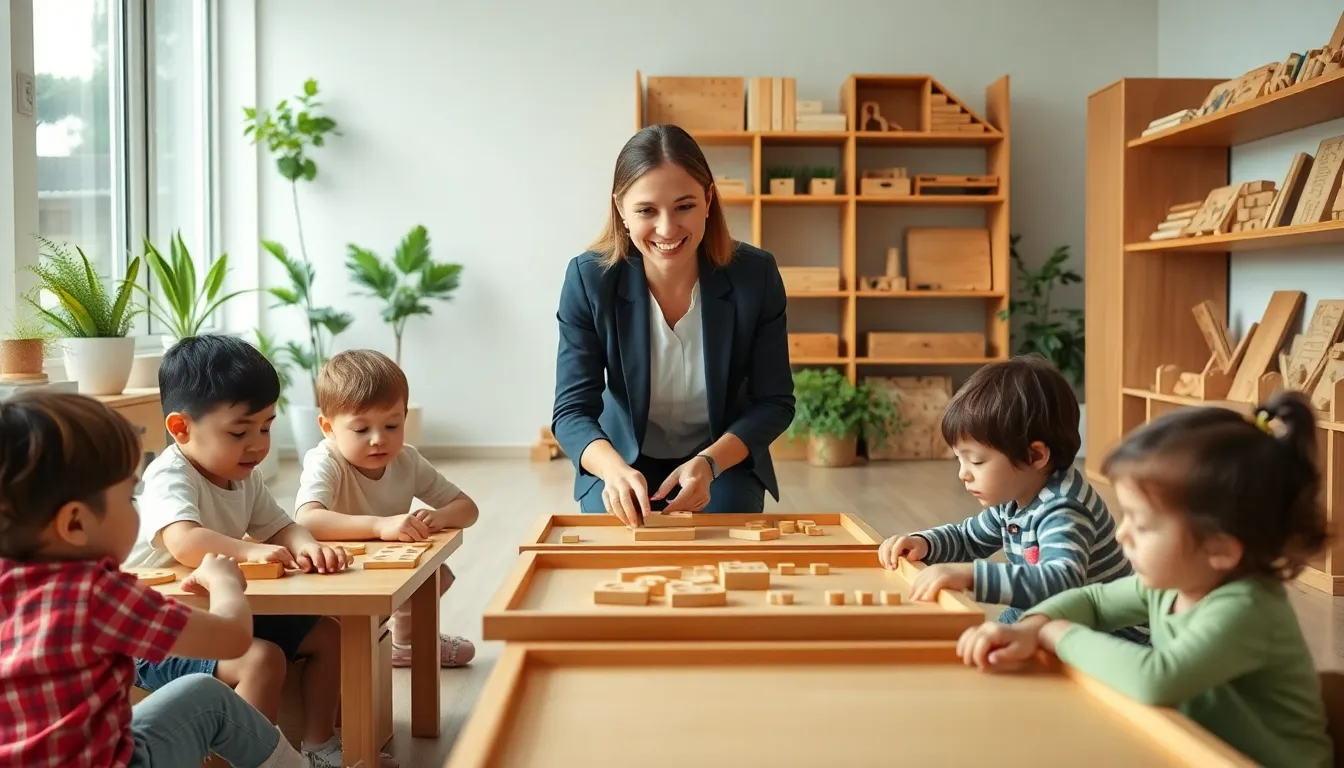
A standout Montessori school follows Dr. Maria Montessori’s core principles. Children work with hands-on materials designed to teach specific concepts. They choose their activities within a structured environment. Teachers act as guides rather than lecturers.
Top Montessori schools share several common traits:
- Mixed-age classrooms: Children typically span three years in age (3-6, 6-9, 9-12). Younger students learn from older peers. Older students reinforce their knowledge by teaching.
- Uninterrupted work periods: Students get blocks of 2-3 hours to focus deeply on chosen activities. This builds concentration and self-discipline.
- Specially trained teachers: Authentic programs employ educators with Montessori certification from recognized training centers like AMI (Association Montessori Internationale) or AMS (American Montessori Society).
- Prepared environment: Classrooms contain carefully selected materials arranged on low, accessible shelves. Everything has a purpose and a place.
The best Montessori schools also maintain low student-to-teacher ratios. A primary classroom (ages 3-6) typically has one lead teacher and one assistant for 20-28 students. This allows teachers to observe each child and provide individual lessons.
Authentic top Montessori programs avoid traditional grading systems. Instead, teachers document progress through observation and portfolio assessment. They focus on each child’s development rather than comparison to peers.
Key Features of Top-Rated Montessori Programs
What separates good Montessori schools from great ones? Top-rated programs share specific features that support deep learning and child development.
Authentic Montessori Materials
Montessori classrooms use specialized learning materials, wooden blocks for math, sandpaper letters for language, puzzle maps for geography. These aren’t random toys. Each material isolates one concept and allows children to discover it through hands-on exploration.
Top Montessori programs invest in complete sets of these materials. They maintain them well and replace items as needed. Broken or incomplete materials limit learning opportunities.
Strong Parent-Teacher Communication
Excellent Montessori schools keep parents informed without over-scheduling conferences. They offer regular updates on a child’s progress, explain the reasoning behind classroom activities, and welcome parent observations.
Many top programs host parent education nights. These sessions help families understand Montessori principles and apply them at home.
Accreditation and Membership
Look for schools accredited by recognized Montessori organizations. AMI and AMS both offer school accreditation programs with specific standards. Accredited schools undergo regular evaluation and must meet quality benchmarks.
Experienced Leadership
Top Montessori schools have administrators who understand the philosophy deeply. They don’t dilute Montessori methods with conventional practices just because they’re familiar. Strong leadership ensures consistency across classrooms and grade levels.
Outdoor and Practical Life Components
Maria Montessori emphasized connection to nature and real-world skills. Top programs include gardening, cooking, cleaning, and outdoor exploration. Children learn to care for their environment, not just memorize facts about it.
How to Evaluate Montessori Schools in Your Area
Finding top Montessori options near you requires some research. Start with these practical steps.
First, search for schools affiliated with AMI, AMS, or other recognized Montessori organizations. Their websites maintain directories of member schools. Membership doesn’t guarantee quality, but it signals commitment to Montessori standards.
Next, read online reviews carefully. Look for specific comments about classroom environment, teacher quality, and child outcomes. Ignore vague praise or complaints, focus on detailed experiences.
Schedule observations at your top choices. Most Montessori schools welcome prospective parents to watch a class in session. This gives you direct insight into daily operations.
During your observation, notice:
- Are children engaged in focused work?
- Does the classroom feel calm but active?
- How do teachers interact with students?
- Are materials well-organized and accessible?
- Do children move freely and make independent choices?
Questions to Ask During Your School Visit
Prepare specific questions for school administrators and teachers. Their answers reveal how well they understand and carry out Montessori education.
Ask about teacher credentials:
- Where did teachers complete their Montessori training?
- How long have they worked in Montessori classrooms?
- What ongoing professional development do they receive?
Ask about classroom practices:
- How long are uninterrupted work periods?
- How do you assess student progress?
- What happens when a child struggles with a concept?
Ask about philosophy:
- How does your school handle discipline?
- What role do parents play in the school community?
- How do you prepare children for transition to other schools?
Genuine top Montessori educators welcome these questions. They’re proud of their training and methods. Hesitation or vague answers may signal a less authentic program.
Choosing the Right Montessori Fit for Your Child
Even among top Montessori schools, some will suit your child better than others. Consider these factors when making your final choice.
Your child’s personality: Montessori education works well for most children, but some thrive more than others in self-directed environments. Children who enjoy independence often flourish immediately. Those who prefer more structure may need time to adjust, and that’s okay.
Location and logistics: The best school means nothing if the commute exhausts your family. Consider drop-off times, after-school programs, and proximity to your home or work. A slightly less prestigious top Montessori program nearby may serve your child better than a distant “perfect” option.
Cost and value: Montessori schools vary widely in tuition. Higher cost doesn’t always mean better quality. Some excellent programs operate as nonprofits or cooperatives with reasonable fees. Others charge premium prices without delivering premium education. Evaluate what you get for the investment.
Community fit: Visit schools multiple times if possible. Talk to current parents. Does the school culture align with your family’s values? Do you see yourself participating in events and building relationships there?
Trust your instincts: After all your research, sometimes a school just feels right. Pay attention to that feeling. You know your child best.