
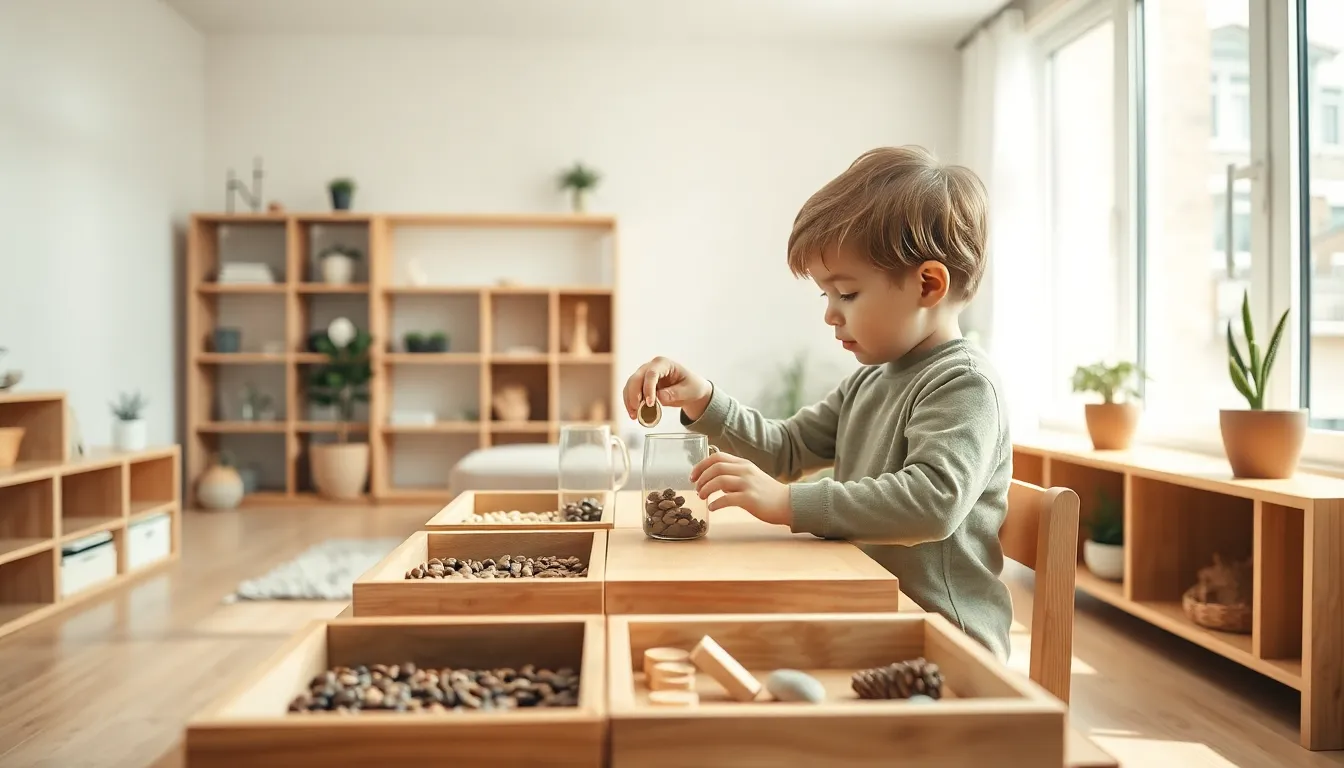
Montessori ideas offer parents a proven framework for raising curious, capable children. Developed over a century ago by Dr. Maria Montessori, this educational approach focuses on child-led learning, hands-on activities, and prepared environments. The good news? Parents don’t need expensive materials or special training to bring these principles home.
Children naturally want to learn. They want to pour their own milk, button their own shirts, and figure out how things work. Montessori ideas simply give them the space and tools to do exactly that. This article covers the core principles behind the method, age-appropriate activities, environment setup tips, and affordable materials that support independent learning.
Table of Contents
ToggleKey Takeaways
- Montessori ideas focus on child-led learning, hands-on activities, and prepared environments that encourage independence.
- Parents can implement Montessori principles at home without expensive materials—everyday items like measuring cups, tongs, and nature finds work effectively.
- Create a child-accessible space with low shelves, child-sized furniture, and organized stations that allow kids to make choices independently.
- Age-appropriate activities matter: toddlers thrive with pouring and sorting, while preschoolers can handle sandpaper letters, counting objects, and real cooking tasks.
- Keep environments calm and minimalist—rotate five to ten activities at a time to maintain focus without overwhelming children.
- Respect the child’s pace and interests by observing rather than directing, allowing uninterrupted work time for deep concentration.
Core Principles of the Montessori Method
The Montessori method rests on a few key ideas that separate it from traditional education. Understanding these principles helps parents apply Montessori ideas effectively at home.
Respect for the Child
Montessori treats children as capable individuals. Adults observe rather than direct. When a child struggles to zip a jacket, the instinct might be to do it for them. Montessori encourages waiting, offering guidance only when truly needed. This builds confidence and problem-solving skills.
Prepared Environment
Children learn best in spaces designed for their size and abilities. Low shelves, child-sized furniture, and accessible materials let kids make choices independently. Everything has a place, and children learn to return items after use.
Hands-On Learning
Abstract concepts make more sense when children can touch, move, and manipulate objects. Counting beads teaches math better than worksheets. Pouring water between pitchers builds motor skills and concentration. Montessori ideas center on learning through doing.
Following the Child
Every child develops at their own pace. One three-year-old might obsess over sorting objects while another prefers building towers. Montessori encourages adults to observe interests and provide activities that match. There’s no fixed curriculum, just responsive guidance.
Uninterrupted Work Time
Deep focus requires time. Montessori recommends long, uninterrupted periods where children can engage with activities. Constant interruptions, even well-meaning ones, break concentration. When a child is absorbed in stacking blocks, let them stack.
Montessori-Inspired Activities for Different Age Groups
Montessori ideas work across ages, but activities should match developmental stages. Here’s what works best for toddlers and preschoolers.
For Toddlers (Ages 1-3)
Toddlers crave independence. They want to do everything themselves, which makes this age perfect for practical life activities.
- Pouring practice: Set up two small pitchers with dried beans or rice. Let toddlers pour back and forth. This builds hand-eye coordination and concentration.
- Simple sorting: Provide a muffin tin and colored pom-poms or large buttons. Sorting by color or size teaches categorization.
- Self-care tasks: Use a low hook for their jacket. Place shoes in an accessible spot. Let them practice dressing with minimal help.
- Nature exploration: Collect leaves, rocks, and pinecones. Toddlers love examining natural objects and comparing textures.
- Water play: A small basin with cups, funnels, and sponges keeps toddlers engaged while teaching cause and effect.
For Preschoolers (Ages 3-6)
Preschoolers are ready for more complex Montessori ideas. They can handle multi-step activities and begin early academic concepts.
- Sandpaper letters: Children trace textured letters with their fingers while saying the sound. This connects tactile memory with phonics.
- Counting with objects: Use beads, buttons, or stones to practice counting and basic addition. Physical objects make numbers concrete.
- Practical life expansion: Preschoolers can help with real cooking tasks, washing vegetables, stirring batter, spreading butter. They can also fold laundry and set tables.
- Puzzles and maps: Wooden puzzles of continents or countries introduce geography. Kids absorb information surprisingly fast when they can touch and move pieces.
- Art and creativity: Offer open-ended art supplies without step-by-step instructions. Let children decide what to create.
Creating a Montessori-Friendly Environment
Montessori ideas depend heavily on environment. The space itself teaches children independence and order.
Child-Accessible Storage
Place materials on low, open shelves where children can see and reach them. Rotate activities every few weeks to maintain interest. Too many choices overwhelm, display five to ten activities at a time.
Child-Sized Furniture
A small table and chair let children work comfortably. A step stool in the kitchen and bathroom extends their reach. When furniture fits their bodies, children gain autonomy.
Order and Organization
Each item needs a designated spot. Use trays, baskets, or containers to organize activities. Children learn to take out one activity, complete it, and return it before choosing another. This builds executive function skills.
Natural Materials and Beauty
Montessori spaces favor wood, glass, metal, and natural fibers over plastic. Real materials provide better sensory feedback. Add plants, artwork at child height, and soft lighting. Beautiful spaces encourage care and respect.
Independence Stations
Create specific areas for self-care. A low mirror with a brush lets children fix their own hair. A small pitcher and cup allows self-serve water. A basket of books at floor level invites reading. These stations send a clear message: you can do this yourself.
Minimalism Over Excess
Cluttered spaces distract. Montessori ideas work best in calm, organized environments. Donate unused toys. Keep surfaces clear. Less stuff means more focus.
Simple Materials You Can Use at Home
Implementing Montessori ideas doesn’t require expensive specialized equipment. Many effective materials already exist in most homes.
Kitchen Items
Measuring cups teach volume and counting. Tongs develop fine motor skills. Small pitchers work for pouring practice. A child-safe knife and cutting board allow food prep participation. Real kitchen tools beat plastic imitations, they function properly and show children they’re trusted.
Household Objects
Baskets serve as sorting containers. Clothespins strengthen finger muscles needed for writing. Spray bottles and small rags turn cleaning into a motor skill activity. Buttons, zippers, and snaps can be attached to fabric for fastening practice.
Nature Finds
Rocks, shells, leaves, and sticks cost nothing but offer endless learning. Children can sort by size, create patterns, or simply explore textures. A magnifying glass adds scientific observation.
DIY Materials
Sandpaper letters can be homemade with cardboard and textured paper. Number cards pair with small objects for counting. Color tablets can be created from paint chip samples. With some creativity, parents can replicate many classic Montessori ideas inexpensively.
Thrift Store Finds
Second-hand shops often stock wooden puzzles, small pitchers, and baskets. Real china cups and small vases teach careful handling better than plastic alternatives. Old keys, locks, and latches become fine motor activities.
Books and Images
Real photographs beat cartoon illustrations for young children. Nature books, picture dictionaries, and art prints expose kids to the real world. Montessori emphasizes reality over fantasy for young learners.