
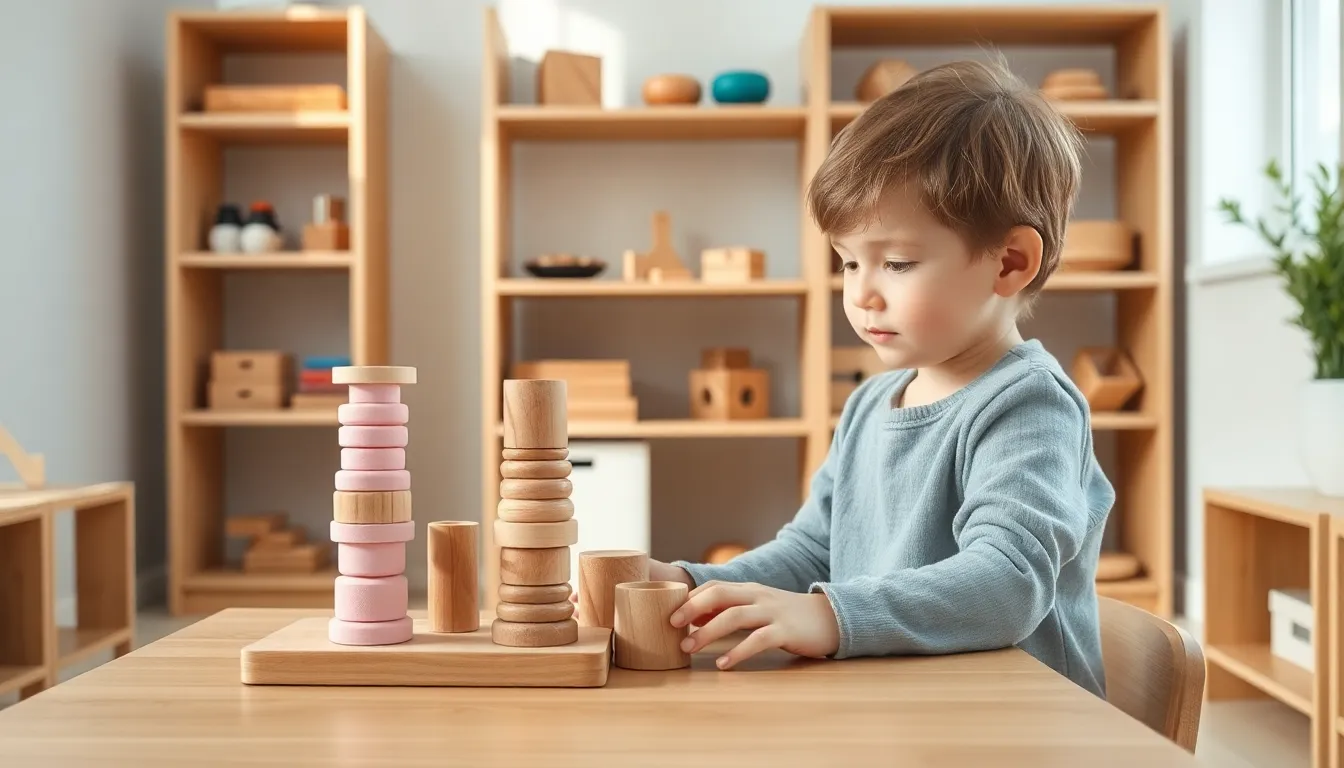
Montessori tools form the foundation of a learning approach that puts children in charge of their own education. These hands-on materials help kids develop independence, concentration, and problem-solving skills through direct experience. Unlike traditional classroom supplies, Montessori tools are designed with specific purposes, each one teaches a concept through touch, movement, and exploration. Whether parents are setting up a home learning space or educators are building a classroom, understanding these materials makes a real difference in how children engage with learning.
Table of Contents
ToggleKey Takeaways
- Montessori tools are specially designed learning materials made from natural materials like wood and metal that teach concepts through hands-on exploration.
- Each Montessori tool isolates one skill or concept and includes built-in error control, allowing children to self-correct without adult intervention.
- Practical life tools (pouring sets, dressing frames, child-sized cleaning supplies) build fine motor skills and foster independence in everyday tasks.
- Sensorial materials train the five senses systematically, preparing children for academic learning by developing precise perception skills.
- When choosing Montessori tools, prioritize quality natural materials, proper sizing for small hands, and materials that match the child’s current developmental stage.
- Using Montessori tools at home improves concentration, builds independence, expands vocabulary, and often results in calmer, more focused behavior.
What Are Montessori Tools?
Montessori tools are specially designed learning materials created to support self-directed education. Dr. Maria Montessori developed these tools in the early 1900s after observing how children naturally learn through their senses and physical interaction with objects.
These tools share several key features. First, they’re made from natural materials like wood, metal, and fabric rather than plastic. Second, each tool isolates one concept or skill, which helps children focus without distraction. Third, most Montessori tools include built-in error control, children can see their own mistakes and correct them without adult intervention.
A classic example is the pink tower. This set of ten graduated cubes teaches size discrimination and fine motor control. Children stack the cubes from largest to smallest, and if they place one incorrectly, the tower looks visibly wrong. The child notices the error and fixes it independently.
Montessori tools differ from regular toys in important ways. Toys often entertain, while Montessori tools teach. Each material serves a specific developmental purpose, whether that’s building hand strength for writing, understanding mathematical concepts, or developing sensory awareness. The tools grow with children, a toddler might use them one way, while a preschooler discovers more advanced applications.
Key Categories of Montessori Materials
Montessori tools fall into distinct categories, each targeting different areas of child development. Two of the most important categories are practical life tools and sensorial materials.
Practical Life Tools
Practical life tools help children master everyday tasks. These materials might seem simple, pouring pitchers, button frames, child-sized brooms, but they serve critical purposes.
These Montessori tools build fine motor skills needed for writing. A child who practices spooning beans from one bowl to another develops the hand control required to hold a pencil. Buttoning and zipping frames prepare children to dress themselves.
Practical life materials also foster independence and self-confidence. When children pour their own water or prepare their own snacks, they feel capable. This sense of competence carries into other learning areas.
Common practical life Montessori tools include:
- Pouring sets with pitchers and glasses
- Dressing frames for buttons, zippers, and laces
- Food preparation tools like child-safe knives and cutting boards
- Cleaning supplies sized for small hands
- Care-of-self materials like mirrors and grooming items
Sensorial Materials
Sensorial Montessori tools train the five senses through systematic exploration. Each material isolates one sensory quality, color, weight, texture, sound, or smell, and presents it in a clear, organized way.
The color tablets teach color discrimination. Children start with primary colors and progress to matching subtle shade differences. This trains visual perception and vocabulary development.
The sound cylinders contain pairs of cylinders that make matching sounds when shaken. Children pair them by listening carefully, which sharpens auditory discrimination.
Other sensorial Montessori tools include:
- The brown stair (teaches dimension and weight)
- Texture boards (develops tactile awareness)
- Geometric solids (introduces three-dimensional shapes)
- Smelling bottles (trains olfactory sense)
These sensorial materials prepare children for academic work. A child who can distinguish slight differences in size will later apply that skill to understanding mathematical concepts.
How to Choose the Right Montessori Tools
Selecting appropriate Montessori tools requires attention to age, developmental stage, and quality.
Start with the child’s current abilities. Montessori tools should challenge children slightly beyond their comfort zone without causing frustration. A two-year-old needs different materials than a four-year-old. Observe what skills the child is working on naturally, then provide tools that support that development.
Quality matters with Montessori tools. Look for materials made from real wood, metal, or glass rather than plastic imitations. Authentic materials last longer and provide better sensory feedback. A wooden cylinder feels different than a plastic one, and that difference affects learning.
Consider size and proportion. Montessori tools should fit small hands comfortably. Child-sized versions of adult items (small pitchers, short brooms, appropriately weighted objects) allow children to succeed.
Watch for these quality indicators in Montessori tools:
- Natural materials that age well
- Clean, simple designs without unnecessary decoration
- Precise construction (cylinders that fit exactly, colors that match properly)
- Durability for repeated use
- Safety features appropriate for the age group
Budget is also a consideration. Quality Montessori tools can be expensive, but many families start with a few key pieces and add more over time. Some practical life materials can be assembled from household items, a small pitcher and glasses, for instance, or a child-sized dustpan.
Benefits of Using Montessori Tools at Home
Bringing Montessori tools into the home environment creates consistent learning opportunities throughout daily life.
Children develop stronger concentration when using these materials. Montessori tools are designed for extended, focused work. A child might spend twenty minutes transferring water with an eyedropper, building attention span in a way that passive entertainment cannot.
Independence grows naturally. When children have access to appropriate Montessori tools, they can prepare snacks, clean up spills, and complete tasks without constant adult help. This reduces frustration for everyone and builds genuine confidence.
Montessori tools also support language development. Each material comes with specific vocabulary, cylinder, prism, gradation, that expands children’s word knowledge. Parents can introduce precise terms during work time, building rich language skills.
The home setting offers advantages that classrooms cannot. Children can work with Montessori tools at their own pace without time limits. They can return to favorite materials repeatedly. Parents can observe interests and follow them with additional resources.
Families often notice behavior improvements after introducing Montessori tools. Children who have meaningful work become calmer and more focused. The satisfaction of completing real tasks, washing dishes, folding laundry, preparing food, reduces the restlessness that comes from boredom.
Montessori tools bridge school and home learning. Children who use similar materials in both settings experience continuity that deepens their understanding.